

Get the Latest Updates!

.svg)

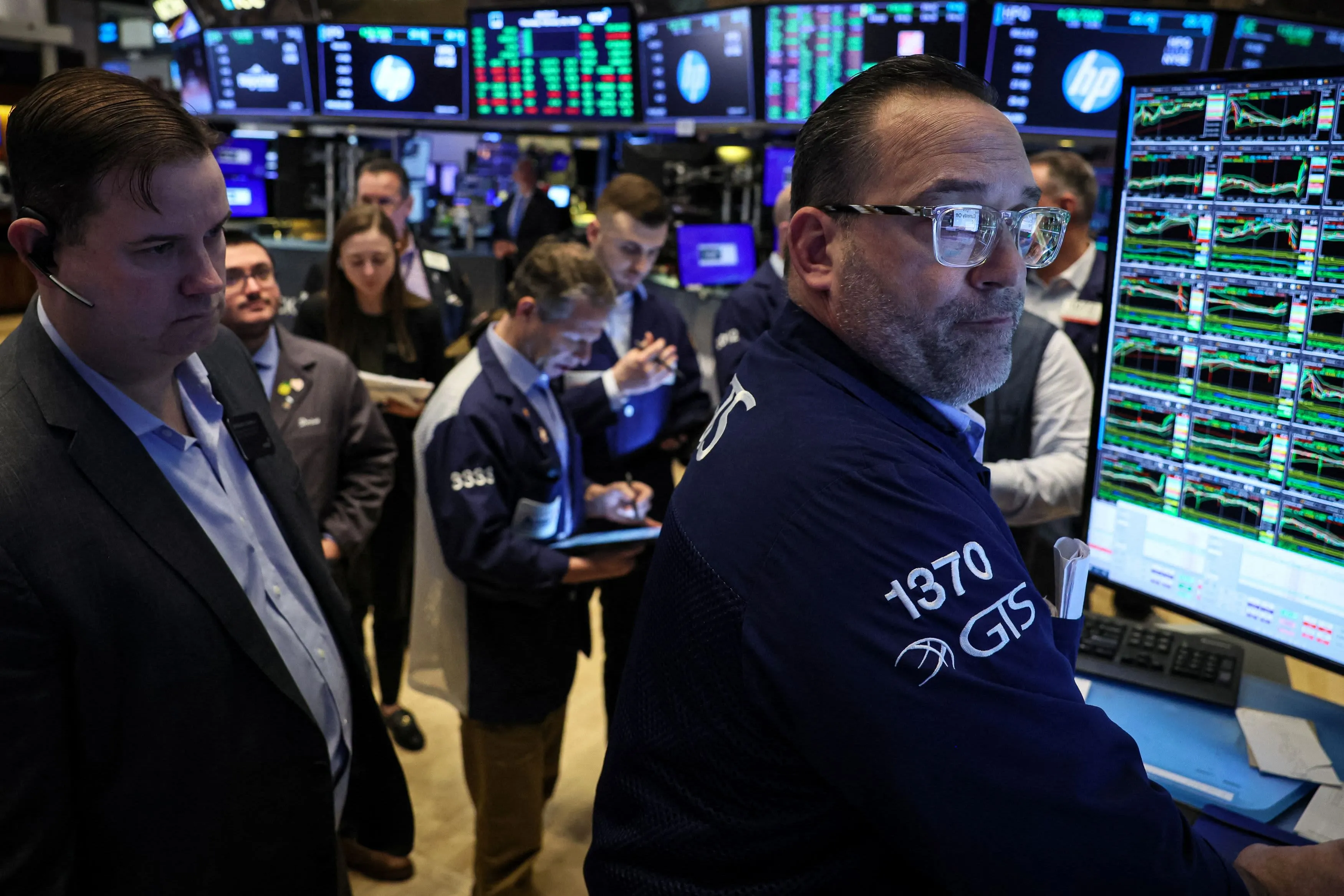

Wall Street Warns that an AI Bubble Is Building and Positions for the Fallout
It has been three years since OpenAI ignited global excitement around artificial intelligence with the launch of ChatGPT. Since then, investment dollars have continued to flood into the space. But alongside that surge of capital, unease has been building over whether the AI boom can sustain its momentum over the long term.
Recent market moves reflect that growing caution. Nvidia Corp. shares have pulled back after a powerful run, Oracle Corp. sank following earnings that highlighted rapidly rising AI-related spending, and sentiment has weakened across a cluster of companies closely tied to OpenAI. As investors look ahead to 2026, the debate is intensifying: is it time to trim AI exposure before a potential bubble deflates, or lean in further to capture what could still be a transformational technology cycle?
“We’re now at the point where execution really matters,” said Jim Morrow, chief executive officer of Callodine Capital Management. “The narrative has been compelling, but investors are effectively putting more chips on the table to see whether the returns ultimately justify the investment.”
Much of the anxiety surrounding AI centers on three big questions: how widely the technology will be adopted, how much it will cost to build and maintain, and whether customers will ultimately be willing to pay enough for AI-powered services. The answers carry major implications not just for individual companies, but for the broader equity market.
The S&P 500’s roughly $30 trillion advance over the past three years has been fueled largely by mega-cap technology leaders such as Alphabet Inc. and Microsoft Corp., along with companies supplying AI infrastructure. That group includes chipmakers like Nvidia and Broadcom Inc., as well as power providers such as Constellation Energy Corp. If these stocks falter, the major indexes are likely to follow.
“These stocks don’t stumble because growth slows,” said Sameer Bhasin, principal at Value Point Capital. “They run into trouble when growth stops accelerating.”
There are, however, still strong arguments on the bullish side. The largest tech firms driving AI investment have enormous balance sheets and have committed to spending aggressively for years to come. At the same time, AI developers, including Alphabet’s Google, continue to roll out more advanced models and expand use cases. That mix of promise and risk is what keeps investors divided.
Below are some of the key themes shaping the AI investment outlook.
Access to Capital
OpenAI alone is expected to spend about $1.4 trillion in the coming years. Despite becoming the world’s most valuable startup in October, the company’s revenue trails far behind its costs. According to The Information, OpenAI is projected to burn roughly $115 billion through 2029 and not generate cash flow until 2030.
So far, funding has not been an obstacle. Earlier this year, OpenAI raised $40 billion from SoftBank Group Corp. and other investors. Nvidia also committed up to $100 billion in September as part of a broader strategy of investing in customers a practice that has sparked concerns about circular financing within the AI ecosystem.
Trouble could emerge if investors begin to hesitate about supplying more capital. Any pullback would likely ripple outward to companies closely linked to OpenAI, including computing-services provider CoreWeave Inc.
“When trillions of dollars are concentrated in a narrow set of themes and stocks, it doesn’t take much for everyone to head for the exits at the same time,” said Eric Clark, portfolio manager at the Rational Dynamic Brands Fund.
Many other companies pursuing AI ambitions are also heavily dependent on external financing. Oracle’s shares surged earlier as cloud bookings climbed, but building data centers requires massive capital. The company has funded much of that expansion by issuing tens of billions of dollars in debt, which adds pressure because bondholders expect regular cash payments.
That vulnerability was on display recently. Oracle stock dropped sharply after the company reported higher-than-expected capital expenditures and weaker-than-anticipated cloud revenue growth. A subsequent report that some OpenAI-related data center projects had been delayed pushed shares lower still, while a measure of Oracle’s credit risk climbed to its highest level since 2009. Oracle said it remains confident in its ability to meet obligations and continue expanding.
“The bond market tends to focus on the most important issue: getting paid back,” said Kim Forrest, chief investment officer at Bokeh Capital Partners.
Big Tech Spending
Alphabet, Microsoft, Amazon.com Inc., and Meta Platforms Inc. are expected to spend more than $400 billion on capital expenditures over the next year, primarily on data centers. While AI-related revenue is growing through cloud services and advertising, it is still far below the scale of the investments being made.
“If growth expectations flatten or slow, the market will start to question the whole story,” said Michael O’Rourke, chief market strategist at Jonestrading.
Earnings growth for the so-called Magnificent Seven which also includes Apple Inc., Nvidia, and Tesla Inc. is forecast at about 18% in 2026, the weakest pace in four years and only slightly better than the broader S&P 500, according to Bloomberg Intelligence.
A major concern is rising depreciation from heavy spending on infrastructure. Combined depreciation costs for Alphabet, Microsoft, and Meta jumped from roughly $10 billion in the final quarter of 2023 to nearly $22 billion in the quarter ending in September, and are projected to approach $30 billion by late next year.
That trend could squeeze buybacks and dividends. By 2026, Meta and Microsoft are expected to generate negative free cash flow after shareholder returns, while Alphabet is forecast to break even, based on Bloomberg Intelligence data.
More broadly, the AI push represents a strategic shift. Big Tech’s valuation premium has long rested on high-margin growth and massive free cash flow. AI spending flips that model on its head.
“If companies keep levering up in hopes of future monetization, valuation multiples will compress,” O’Rourke said. “If it doesn’t work, this pivot could prove costly.”
Valuations and the Bubble Debate
Despite elevated prices, today’s valuations are far from dot-com extremes. The Nasdaq 100 trades at about 26 times forward earnings, compared with more than 80 times during the tech bubble’s peak.
“These aren’t dot-com era valuations,” said Tony DeSpirito, global chief investment officer at BlackRock. “There are pockets of speculation, but not broadly across the Magnificent Seven.”
Some AI-linked stocks do look stretched. Palantir Technologies trades at more than 180 times projected earnings, while Snowflake sits near 140 times. In contrast, Nvidia, Alphabet, and Microsoft are all below 30 times relatively modest given the enthusiasm surrounding them.
That leaves investors stuck in the middle. Risks are increasingly visible, yet most AI leaders are not priced at levels that scream collapse. The more likely outcome, many believe, is not a crash but a shift.
“This kind of consensus trade eventually breaks,” Bhasin said. “It probably won’t end like 2000 but rotation is coming.”
Image
Gallery.


Subscribe to our newsletter!
As a leading independent research provider, TradeAlgo keeps you connected from anywhere.

Explore
Related posts.

