

Get the Latest Updates!

.svg)

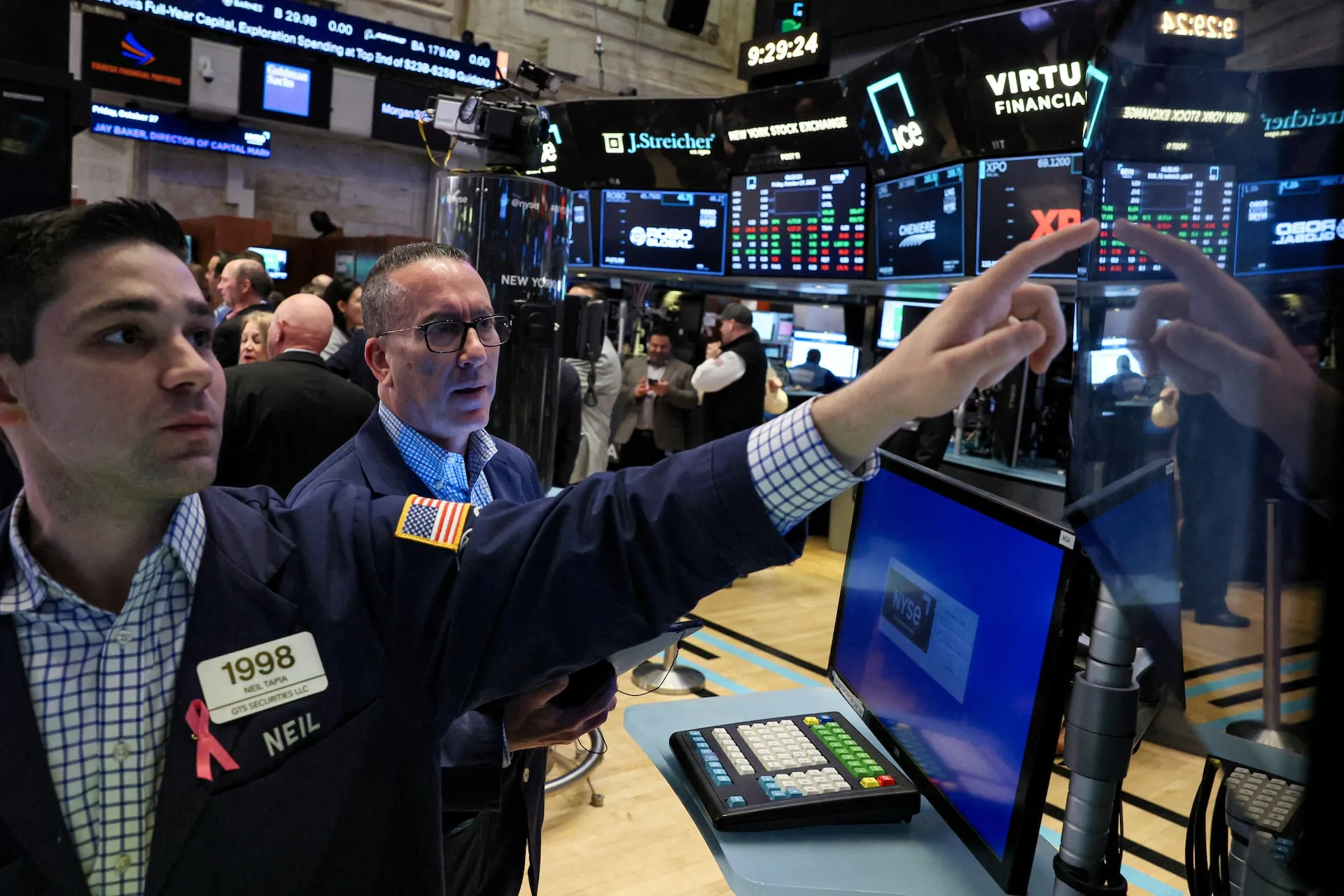

US stocks moved lower on Thursday as investors weighed a mixed set of earnings from cash-heavy technology giants, tempering earlier optimism tied to progress in Washington toward avoiding a US government shutdown. While hopes of a bipartisan agreement offered some support, trading action showed that company-specific results especially among big AI spenders were once again setting the tone for markets.
By mid-morning in New York, the S&P 500 Index was down 0.3%, reflecting losses in several large technology names. The Nasdaq 100, which has a heavy concentration of growth and tech stocks, slid 0.7%. In contrast, the Dow Jones Industrial Average rose 0.4%, helped by gains in energy and industrial shares. Energy stocks climbed alongside oil prices after President Donald Trump renewed threats toward Iran, injecting fresh geopolitical risk into commodity markets.
“Big tech earnings weren’t perfect, but on balance they were positive,” wrote Tom Essaye, founder of the Sevens Report, referring to the latest batch of megacap technology results released overnight. Still, the uneven reactions in the stock market suggest investors are becoming more selective after years of broad-based enthusiasm for large technology firms.
Meta Platforms Inc., the parent company of Facebook, stood out as one of the strongest performers in the major indexes. Analysts pointed to the company’s better-than-expected revenue outlook as a key reason for the rally, noting that it helps justify Meta’s aggressive capital spending plans for the coming year. Investors appeared reassured that the company’s heavy investment in artificial intelligence and infrastructure could be supported by solid top-line growth.
That optimism contrasted sharply with the market’s reaction to Microsoft Corp. shares, which lagged significantly. Microsoft faced selling pressure after issuing guidance that disappointed investors, particularly around its cloud computing business. While the company continues to invest heavily in AI and data-center capacity, capital expenditures came in higher than expected, raising questions about the timing and scale of future returns.
The divergence between Meta and Microsoft highlighted a growing trend: investors are no longer rewarding AI spending across the board and are instead scrutinizing which companies can translate those investments into sustained growth.
“The AI theme, and who ultimately benefits from AI capital expenditures going forward, remains the biggest driver of factor performance and market-cap positioning,” said Dennis DeBusschere, president and chief market strategist at 22V Research. His comments underscore how central artificial intelligence remains to equity market narratives even as confidence in the trade becomes more nuanced.
Market participants will get another opportunity to reassess the health of the megacap technology sector later Thursday, when Apple Inc. releases its quarterly earnings after the closing bell. Apple’s results are expected to provide insight into consumer demand, services growth, and how the company plans to navigate its own AI strategy amid intensifying competition.
Beyond earnings, investors are also keeping a close eye on developments in Washington. Reports suggest President Trump and Senate Minority Leader Chuck Schumer are moving closer to an agreement that would prevent a partial government shutdown.
With federal funding set to expire this weekend, the timeline has become increasingly tight. Derek Holt, head of capital markets economics at Scotiabank, warned that “the US is creeping too close for comfort” to a shutdown, even if a last-minute deal remains possible.
Economic data released Thursday added another layer to the market picture. Initial jobless claims for the most recent week came in higher than economists had forecast, signaling a potential softening in parts of the labor market.
At the same time, continuing claims declined, suggesting that many workers who lose jobs are still finding new employment relatively quickly. The mixed signals did little to sway markets decisively but reinforced the sense that the economy is slowing unevenly rather than abruptly.
Individual stocks also reacted to company-specific news outside the technology sector. Shares of Dow Inc. fell after the chemical maker announced plans to cut roughly 4,500 jobs, a move aimed at streamlining operations and reducing costs amid challenging demand conditions. The announcement served as a reminder that while parts of the market remain resilient, other industries are feeling pressure from slower growth and higher financing costs.
Investors were also preparing for a slate of additional economic data due later in the session. Reports on factory orders, durable goods orders, and wholesale inventories were scheduled for release at 10 a.m. in New York, offering further insight into manufacturing activity and business investment. On Friday, producer price inflation data is expected, which could influence expectations around future Federal Reserve policy moves.
Taken together, Thursday’s market action reflected a familiar theme in 2026: optimism tempered by selectivity. While hopes of avoiding a government shutdown and pockets of strong earnings provided support, investors remain cautious about valuations, spending discipline, and the durability of growth especially within the technology sector.
As AI investment continues to reshape corporate strategies, markets appear increasingly focused on separating long-term winners from companies still working to justify their massive outlays.
Image
Gallery.


Subscribe to our newsletter!
As a leading independent research provider, TradeAlgo keeps you connected from anywhere.

Explore
Related posts.

