

Get the Latest Updates!

.svg)

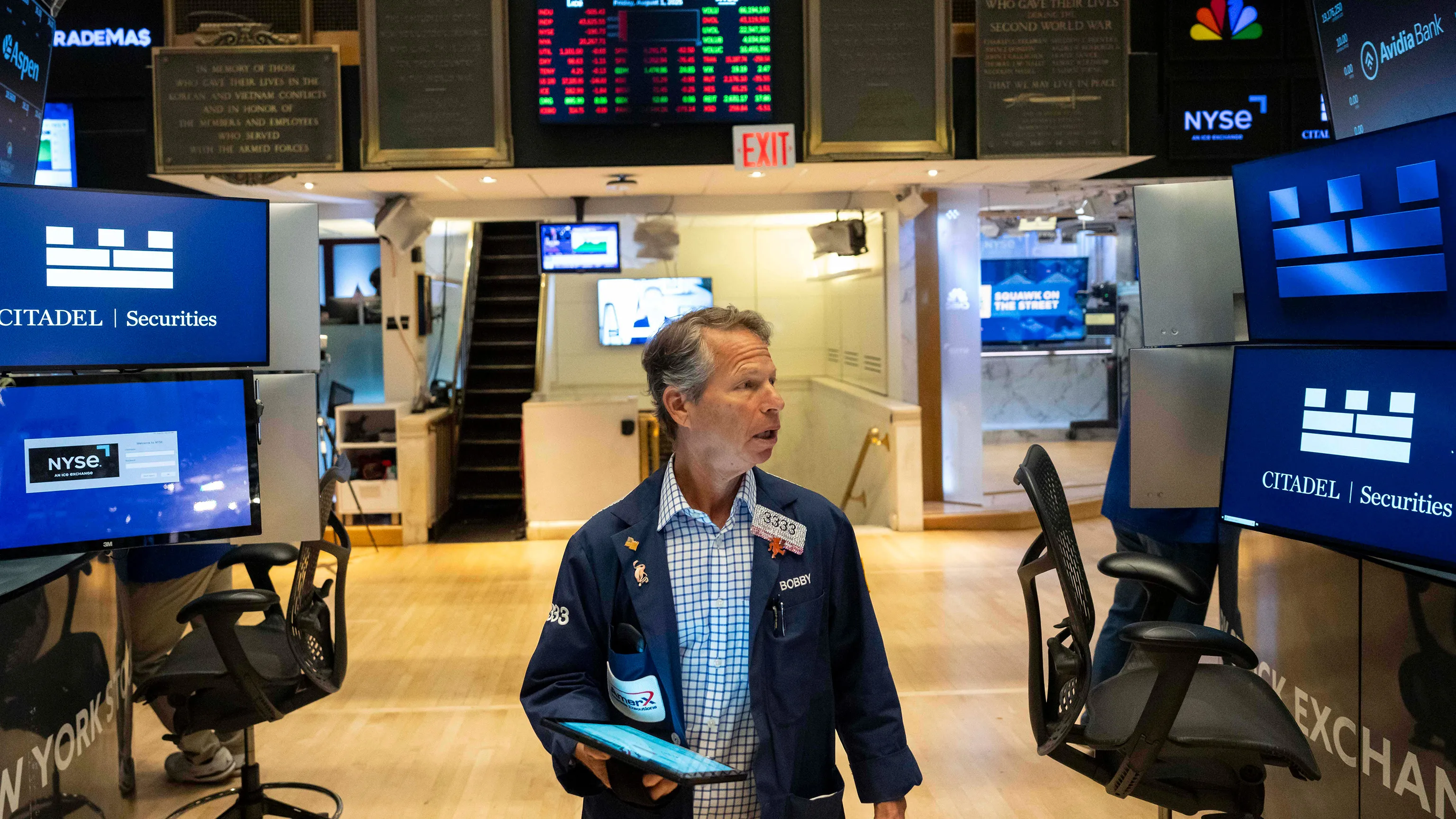

The final leg of a hectic trading week ended with stocks pushing higher, even as investors navigated the expiration of an unprecedented volume of options that had the potential to exaggerate market swings. Bitcoin rallied sharply, while bonds moved lower.
Equities were supported by renewed strength in several large technology companies that have recently faced scrutiny over the scale of their artificial intelligence spending. That rebound helped lift the broader market, with the S&P 500 posting consecutive gains and erasing its losses for the week. Nvidia Corp. paced advances among megacap stocks, while Oracle Corp. jumped roughly 6.5%.
Trading activity surged as more than 26 billion shares changed hands on US exchanges, marking volume about 50% above the 12-month average. The spike coincided with a quarterly phenomenon known as triple witching, when stock options, index options, and futures contracts all expire simultaneously. Citigroup Inc. estimated that roughly $7.1 trillion in notional open interest was set to roll off.
For long-term investors, however, the frenzy may be more spectacle than substance. “Does it matter for long-term investors? Absolutely not,” said Kenny Polcari of SlateStone Wealth. “Expect noise and expect volume, but don’t mistake either for something fundamental. These moves are largely mechanical.”
After a recent pullback driven by doubts about AI enthusiasm and uncertainty over how aggressively the Federal Reserve might ease policy, buyers stepped back into the market. Although the week’s economic data offered little fresh guidance, traders continued to price in two interest-rate cuts in 2026.
Those who had been wondering whether the traditional year-end “Santa Claus rally” would arrive may finally be seeing early signs. The seasonal pattern typically covers the final five trading days of the year and the first two sessions of January. “Even though the official start is the Christmas Eve half-day, it looks like traders are getting a head start this year,” said Steve Sosnick of Interactive Brokers.
By the close, the S&P 500 rose 0.9%, while the Nasdaq 100 gained 1.3%. Bitcoin advanced about 3%. US Treasuries notched their first weekly gain since late November but faded on Friday, with the 10-year yield climbing three basis points to 4.15%.
Overseas, Japan’s 10-year government bond yield climbed to its highest level since 1999, and the yen weakened as investors digested ongoing uncertainty around the Bank of Japan’s policy direction, even after a widely anticipated rate increase.
Seasonal trends also remain supportive. Since 1928, the S&P 500 has risen 75% of the time during the final two weeks of December, with an average gain of 1.3%, according to data from Citadel Securities. Retail traders have also shown persistent optimism, acting as net buyers of call options on US stocks in 32 of the past 33 weeks the longest streak in Citadel’s records.
Flows into equities have been robust as well. Bank of America reports that investors are pouring money into US stocks at near-record levels in anticipation of lower borrowing costs, potential tariff relief, and tax cuts in 2026. US equities attracted nearly $78 billion in inflows in the week ended Dec. 17, based on EPFR Global data, with technology stocks contributing for the first time in three weeks.
“The trend is still constructive, and a Santa Claus rally into year-end wouldn’t surprise anyone,” said Louis Navellier of Navellier & Associates. “I’m looking for a strong finish to the year and momentum carrying into early 2026.”
Alexander Guiliano of Resonate Wealth Partners added that the broader backdrop remains healthy, and recent valuation pullbacks are creating openings for investors who are underexposed to equities. “Trying to perfectly time the AI bubble is a mistake,” he said. “This is a structural investment boom. The key is to invest thoughtfully, not speculate.”
Guiliano suggests focusing on companies that are building and enabling critical technology while maintaining the balance-sheet strength to adapt, recover from missteps, and ultimately compete effectively. Many large technology firms, he noted, fit that profile despite elevated valuations.
After the intense volatility seen in April, few investors would have predicted how steady the remainder of the year would be. No market drawdown exceeded 5% until November, and every dip was quickly bought. Strong earnings, enthusiasm around AI, and residual positioning adjustments from April’s selloff helped drive stocks higher, with momentum only slowing as AI optimism was questioned late in the year.
At Nationwide, Mark Hackett said recent market action beneath the surface remains encouraging, pointing to solid market breadth, leadership rotation, and increased discipline around valuations. UBS Global Wealth Management’s Ulrike Hoffmann-Burchardi echoed that optimism, citing resilient growth, prospective Fed cuts, and continued AI progress as reasons to favor US equities.
Beyond stocks, Hoffmann-Burchardi also sees appeal in high-quality bonds and gold. As interest rates drift lower, she expects the US dollar to weaken into the first half of 2026 and advises investors to reassess currency exposure.
On the data front, US consumer sentiment improved modestly in December but remained subdued due to affordability pressures, while existing-home sales showed only marginal growth in November. New York Fed President John Williams signaled there is no urgency for further rate cuts, reinforcing expectations for a pause after recent easing.
Goldman Sachs strategists believe that rate cuts combined with steady growth should prolong the economic expansion and support risk assets, though volatility may increase as valuations remain elevated. Still, they see conditions as broadly favorable for equities and emerging markets, with a mildly negative outlook for the dollar.
Image
Gallery.


Subscribe to our newsletter!
As a leading independent research provider, TradeAlgo keeps you connected from anywhere.

Explore
Related posts.

