

Get the Latest Updates!

.svg)

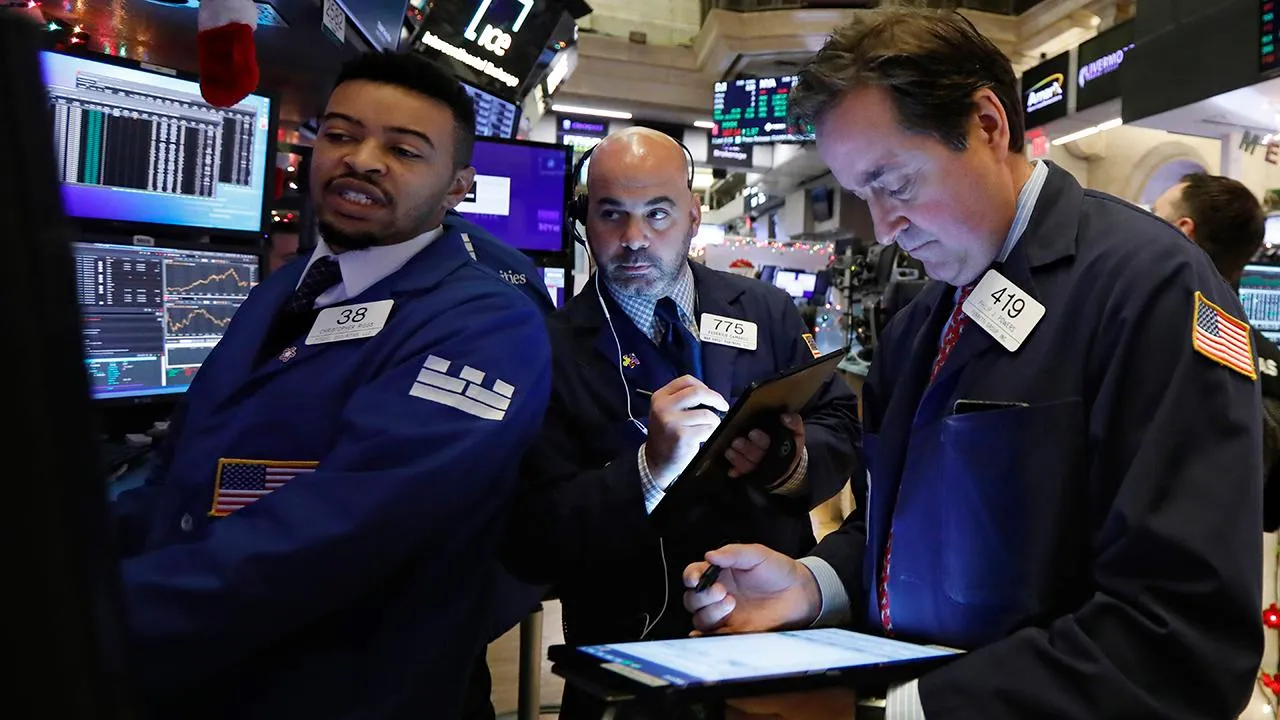

Global equity markets have started the year on a confident footing, raising hopes that investors could be on track for a fourth consecutive year of healthy gains. From Asian exchanges in Tokyo to European markets in Paris and US benchmarks in New York, stocks have been moving higher in sync.
That momentum, however, is about to face its first real challenge of 2026. Corporate earnings season is kicking off against a backdrop of escalating geopolitical tensions and lingering uncertainty around the pace of global economic growth. For equity bulls, the margin for error looks increasingly thin.
Valuations remain elevated across major markets. The MSCI World Index is trading at roughly 20 times forward earnings, well above its 10-year average multiple of 17. After a powerful 19% rally last year, investors are now demanding proof that earnings growth can accelerate enough to support further upside.
In the US, analysts expect S&P 500 earnings to have climbed more than 8% in the most recent quarter, followed by gains of at least 11% in each remaining reporting period this year, according to TradeAlgo. Asian companies are projected to deliver a much stronger 14% increase in fourth-quarter profits, while Europe lags, with earnings growth forecast at just over 1%.
“With markets trading at these valuation levels, there’s simply no room for earnings disappointments,” said Neil Birrell, chief investment officer at Premier Miton Investors. “If 2026 profit forecasts start getting revised lower, the rally could quickly come under pressure.”
So far, earnings signals have been uneven. Major US banks offered a lukewarm assessment of economic conditions, while Europe’s reporting season got off to a sluggish start after soft results from luxury giant Richemont. Once again, artificial intelligence provided a bright spot. Taiwan Semiconductor Manufacturing Co. issued an upbeat outlook for AI chips, sparking a global tech rally late last week.
AI is expected to dominate this earnings season yet again, largely because many of the world’s biggest and most profitable companies are deeply tied to the theme. While few expect a broad collapse in AI-related results, cracks began to appear late last year as investors questioned whether spending levels were justified. That skepticism has shifted attention toward the rest of the economy, including consumer goods, energy, materials, and healthcare.
Guidance will be especially important. Investors are watching closely for clues about how corporate leaders see the economic landscape evolving amid frequent policy shifts and political uncertainty emanating from Washington.
Below are the major themes shaping this earnings season.
Capital is finally rotating into more traditional sectors such as banks, industrials, miners, and consumer companies. The bet is that growth will expand beyond AI and that these industries will begin contributing more meaningfully to index-level returns.
“Tech earnings should be solid, but expectations are stretched and valuations are rich,” said Stephanie Link, chief investment strategist at Hightower Advisors. “There are compelling opportunities in other parts of the market.” She favors industrials, energy, financials, and consumer discretionary stocks.
While Richemont’s results disappointed, upcoming earnings from everyday brands like Procter & Gamble and Johnson & Johnson will offer insight into consumer resilience. In the US, expectations remain that households still have enough spending power to absorb higher prices and a cooling labor market.
Investors have become more selective with AI exposure, particularly toward companies spending aggressively without clear evidence of near-term returns. Meta Platforms shares are down 7% since its last earnings report rattled markets with heavy investment plans. Oracle, once a favorite AI play, has also stumbled after turning to debt markets for funding.
The pressure is especially intense on US megacaps. The so-called Magnificent Seven are expected to post profit growth of around 20% in the fourth quarter, four times faster than the rest of the S&P 500. Meanwhile, Meta, Microsoft, Amazon, Alphabet, and Oracle are projected to spend a combined $530 billion in 2026, according to Bank of America.
Whether those investments pay off remains the central question. Evercore ISI strategist Julian Emanuel says investors should focus on capital spending relative to free cash flow. “We want to see capex supported by free cash flow and balance sheets remain in a net cash position,” he said.
TSMC provided some reassurance by forecasting capital expenditures of $52 billion to $56 billion and revenue growth nearing 30% in 2026. Last year, its operating cash flow comfortably exceeded capex, according to data.
Despite geopolitical risks and ongoing trade uncertainty, many economists still expect solid global growth in 2026. Tariff policy remains fluid, however, complicating corporate forecasts. The US recently cut tariffs on Taiwan to 15%, marking yet another shift companies must factor into their outlooks.
Adding to the uncertainty is an impending Supreme Court decision on whether the legal basis for certain tariffs violates the constitution. An adverse ruling for the Trump administration could trigger billions in refunds and disrupt months of supply-chain planning.
“Corporate guidance around potential refunds and tariff impacts will be closely watched,” said JPMorgan strategist Dubravko Lakos-Bujas.
Oil markets remain equally volatile. Venezuela’s political upheaval has brought its reserves back into focus, while tensions with Iran raise the risk of disruptions through the Strait of Hormuz.
Rising geopolitical tensions have prompted governments worldwide to boost military budgets, benefiting defense contractors. Shares of Rheinmetall, Northrop Grumman, and Hanwha Aerospace have surged as a result.
Strong earnings will be necessary to justify increasingly stretched valuations. Investors are looking for confirmation that demand is translating into higher revenue and improved margins.
While Melius Research’s Scott Mikus expects further upside, he warns the sector could cool if geopolitical tensions ease, a Ukraine ceasefire emerges, or US defense spending fails to rise meaningfully in 2027.
Earnings from Lockheed Martin and General Dynamics in the US, along with Rheinmetall and Saab in Europe, will be closely watched.
Expectations are particularly high for Europe, where analysts forecast nearly 11% earnings growth this year after stagnation in 2025. Much of that optimism centers on banks, which benefit from stable growth, easing inflation pressures, and attractive valuations. UBS and Deutsche Bank are among the most anticipated reports.
Luxury brands like LVMH and Kering, along with automakers such as Volkswagen and Mercedes-Benz, will also offer insight into Chinese consumer demand.
Although analysts trimmed European profit estimates ahead of earnings season, longer-term prospects remain favorable. “Europe still offers good value,” said Goldman Sachs strategist Sharon Bell, noting increased buybacks and improved shareholder returns.
Asia also looks promising. The CSI 300 Index has climbed 18% over the past six months, with earnings expectations improving. While autos and e-commerce face headwinds, analysts expect brokers, miners, and AI-related firms to lead gains.
“We’re looking for stronger signals from major Asian markets, especially China and South Korea,” said Lombard Odier strategist Homin Lee.
Image
Gallery.


Subscribe to our newsletter!
As a leading independent research provider, TradeAlgo keeps you connected from anywhere.

Explore
Related posts.

