

Get the Latest Updates!

.svg)

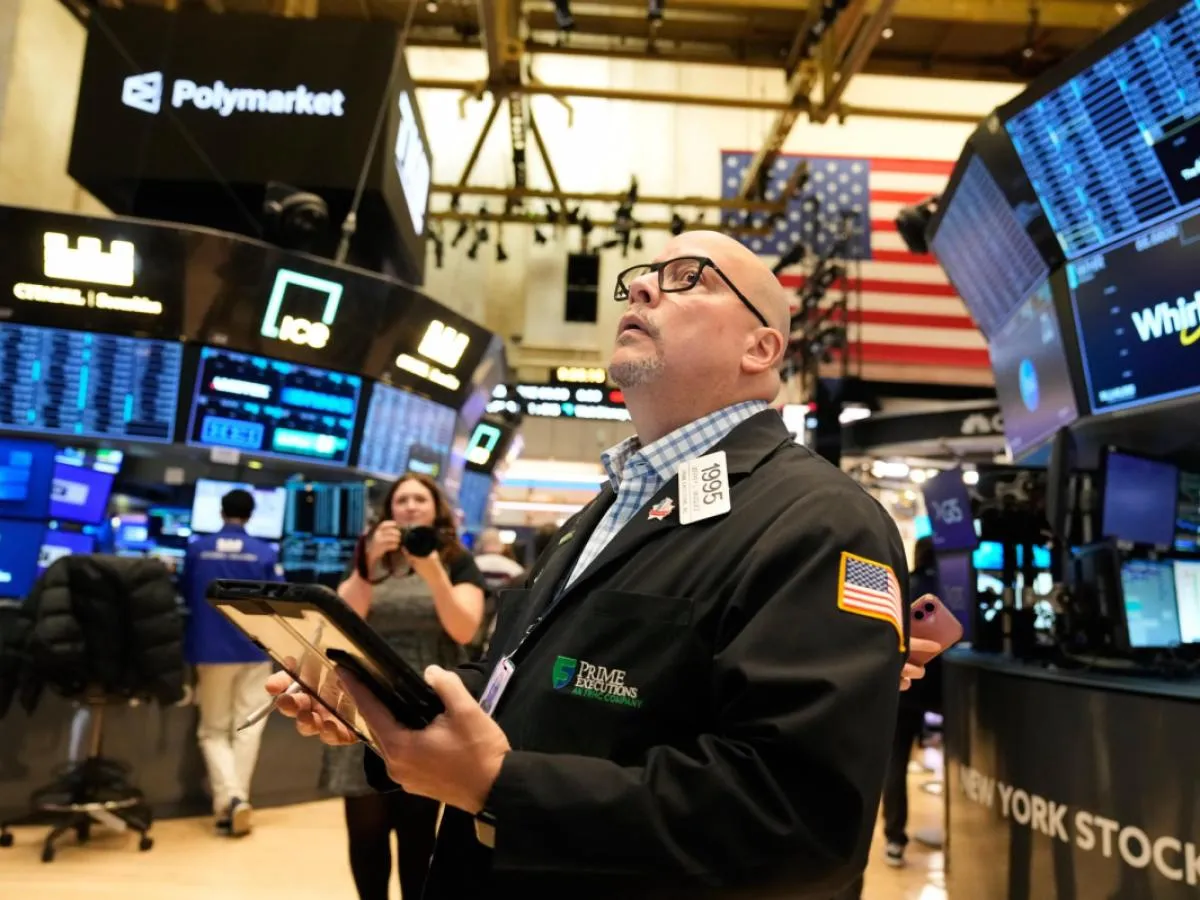

US equities continued to grind higher on Friday as enthusiasm around technology shares carried over for a second consecutive session, reinforcing a cautiously optimistic tone across markets.
The S&P 500 edged up 0.07% by 9:56 a.m. in New York, marking its second straight gain and extending its rebound from the index’s first back-to-back decline of the year. Technology-heavy benchmarks showed stronger momentum, with the Nasdaq 100 climbing 0.2% and an index tracking semiconductor stocks jumping 1.75%. Small-cap shares also remained in favor, as the Russell 2000 rose 0.2% and looked poised to outperform the S&P 500 for an 11th consecutive session.
“The market is signaling that a pro-cyclical global expansion is underway,” said Doug Beath, global equity strategist at Wells Fargo Investment Institute. “Value and small-cap stocks are leading the way so far this year, and market participation is broadening, as evidenced by the continued outperformance of the S&P 500 equal-weight index versus the traditional market-cap-weighted benchmark.”
Despite the strong opening to 2026, Beath cautioned that the rally may not be entirely smooth from here. He noted that volatility could resurface in the coming weeks as fourth-quarter earnings season unfolds and geopolitical risks remain elevated.
Thursday marked a notable revival for artificial intelligence-linked stocks after Taiwan Semiconductor Manufacturing Co. issued an upbeat outlook. Prior to that, skepticism around AI valuations had been building, prompting some investors to rotate into other areas of the market in search of growth opportunities.
Now, with earnings reports from several major technology companies approaching, interest in the AI theme appears to be regaining traction. Even so, the Nasdaq 100 remains on track for a weekly decline, underscoring the uneven nature of the recent rebound.
While large-cap indexes have seesawed throughout the week, small-cap stocks have delivered a more consistent performance. The Russell 2000 has now outpaced the S&P 500 for 10 straight sessions, marking its longest winning streak against the benchmark since 1990.
“There’s a new leader emerging at the start of 2026,” said Brian Jacobsen, chief economic strategist at Annex Wealth Management. “After years of false starts, where it looked like big-cap tech might finally give way to broader participation, small-cap value stocks are now taking center stage. What many have called the ‘Great Rotation’ may finally be gaining real momentum.”
Mid-cap stocks are also off to a solid start globally, according to Kathleen Brooks, research director at XTB. She pointed to several factors supporting the group, including rising concentration risks within mega-cap technology stocks. Brooks highlighted the recent performance of Sandisk Corp. and the broader semiconductor industry as evidence that blue-chip stocks could once again face heightened vulnerability.
“If enthusiasm around AI begins to fade, the S&P 500 could experience a sharp pullback,” Brooks said. “By contrast, the Russell 2000 offers a much wider mix of sector leadership. Its top-performing areas include basic materials, energy, and telecommunications, with technology ranking only fourth.”
Brooks also noted that Erasca Inc., the best-performing stock in the Russell 2000 so far this year through Thursday’s close, could prove more resilient if the tech trade unwinds further.
With earnings from the largest US banks largely behind the market, attention turned to regional lenders. Shares of PNC Financial Services Group Inc. rose 3.7% after the bank reported higher fourth-quarter revenue that exceeded analyst expectations. Improved financing activity and increased dealmaking among middle-market clients helped drive the upside surprise.
In contrast, Regions Financial Corp. saw its stock decline after missing consensus estimates on both earnings per share and total loans for the quarter. The lender was also downgraded by Wells Fargo following the results. State Street Corp. shares moved lower as well after the trust bank projected full-year expenses would rise between 3% and 4%, while net interest income is expected to grow only in the low single digits.
Outside the financial sector, JB Hunt Transport Services Inc. fell after posting weaker-than-expected fourth-quarter revenue, extending concerns tied to the ongoing slowdown in freight demand.
Looking ahead, Beath said investors may take a more cautious stance in the coming week as they digest recent geopolitical developments and policy announcements. “With more time to reflect on the events of the past week, markets may not remain as calm,” he said, adding that renewed volatility could emerge as uncertainty resurfaces.
Image
Gallery.


Subscribe to our newsletter!
As a leading independent research provider, TradeAlgo keeps you connected from anywhere.

Explore
Related posts.

