

Get the Latest Updates!

.svg)

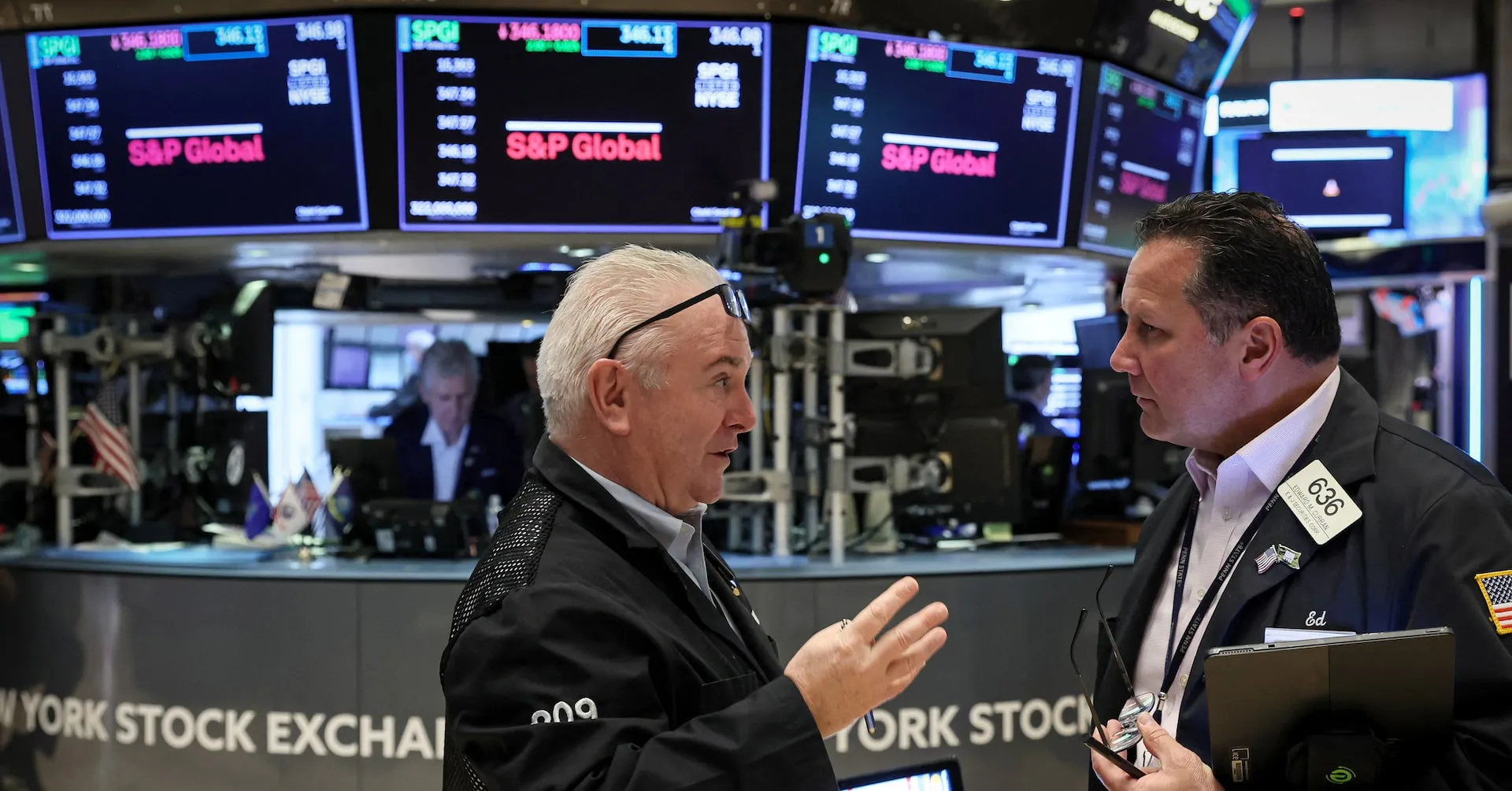

Stocks, bonds, and precious metals all retreated on the final trading day of 2025, putting a subdued finish on what was otherwise a strong year for global markets.
US equities extended their post-holiday pullback, trimming some of the gains built earlier in the year. The S&P 500 continued its slide after Christmas, leaving the benchmark up roughly 16% for 2025.
The Nasdaq 100 fell 0.8% on Wednesday, marking its fourth straight daily decline. Even with the late-year weakness, both indexes delivered double-digit annual returns for a third year in a row, their longest run of consecutive gains since 2021.
Precious metals also stumbled at year-end. Gold and silver slipped after notching their strongest annual performance since the 1970s. Volatility in recent sessions prompted CME Group to raise margin requirements on precious metals futures for the second time in just one week, adding pressure to the space.
For investors, 2025 proved to be a year of standout returns, driven by optimism around the transformative potential of artificial intelligence and reinforced by interest-rate cuts from the Federal Reserve. Still, the journey was far from smooth.
Markets were repeatedly jolted by shifting US trade policies, ongoing geopolitical tensions, concerns about stretched equity valuations, and lingering uncertainty over the future path of central-bank policy.
“Calling 2025 ‘resilient’ almost undersells what markets managed to accomplish,” said Adam Turnquist, chief technical strategist at LPL Financial. “The economy pushed through higher inflation, a cooling labor market, fewer rate cuts than many expected, and a sharp increase in effective tariffs. Despite all of that, growth held up and the US avoided a recession.”
As investors turn their attention to 2026, some strategists are urging caution, at least in the near term. Bespoke Investment Group noted that the first trading day of a new year has historically been more likely to deliver losses than gains. Since 1953, the median move for the S&P 500 on the year’s opening session has been a 0.3% decline, with advances occurring less than half the time. Adding to the concern, US stocks have finished lower on the first trading day in each of the past three years.
Outside of equities, US Treasuries wrapped up their best annual performance since 2020. On the final day of trading, government bonds edged lower, pushing the 10-year Treasury yield up to around 4.17%.
Markets barely reacted to fresh US labor data released Wednesday. New filings for unemployment benefits dropped to one of the lowest readings of the year. Initial jobless claims fell by 16,000 to 199,000 in the week ending December 27, according to the Labor Department. Economists surveyed by Bloomberg had expected a higher figure of about 218,000, suggesting the labor market remains relatively firm.
The US dollar was little changed after posting gains over the previous three sessions. Even so, the greenback is set to record its weakest annual performance since 2017. Some investors believe further downside could lie ahead if the next Federal Reserve chair pursues more aggressive interest-rate cuts.
In digital assets, Bitcoin ended the year in the red after giving up an earlier rally that pushed prices to a record high in October. The world’s largest cryptocurrency has since traded in a relatively narrow range between roughly $85,000 and $95,000 following a sharp October selloff, leaving it on track for its first annual decline in three years.
Bitcoin began 2025 with a strong rally fueled by optimism over the crypto-friendly stance of President Donald Trump’s second administration. That enthusiasm faded as uncertainty surrounding US tariff policies weighed on risk appetite, underscoring how sensitive digital assets remain to shifts in the broader macroeconomic landscape.
Image
Gallery.


Subscribe to our newsletter!
As a leading independent research provider, TradeAlgo keeps you connected from anywhere.

Explore
Related posts.

