

Get the Latest Updates!

.svg)

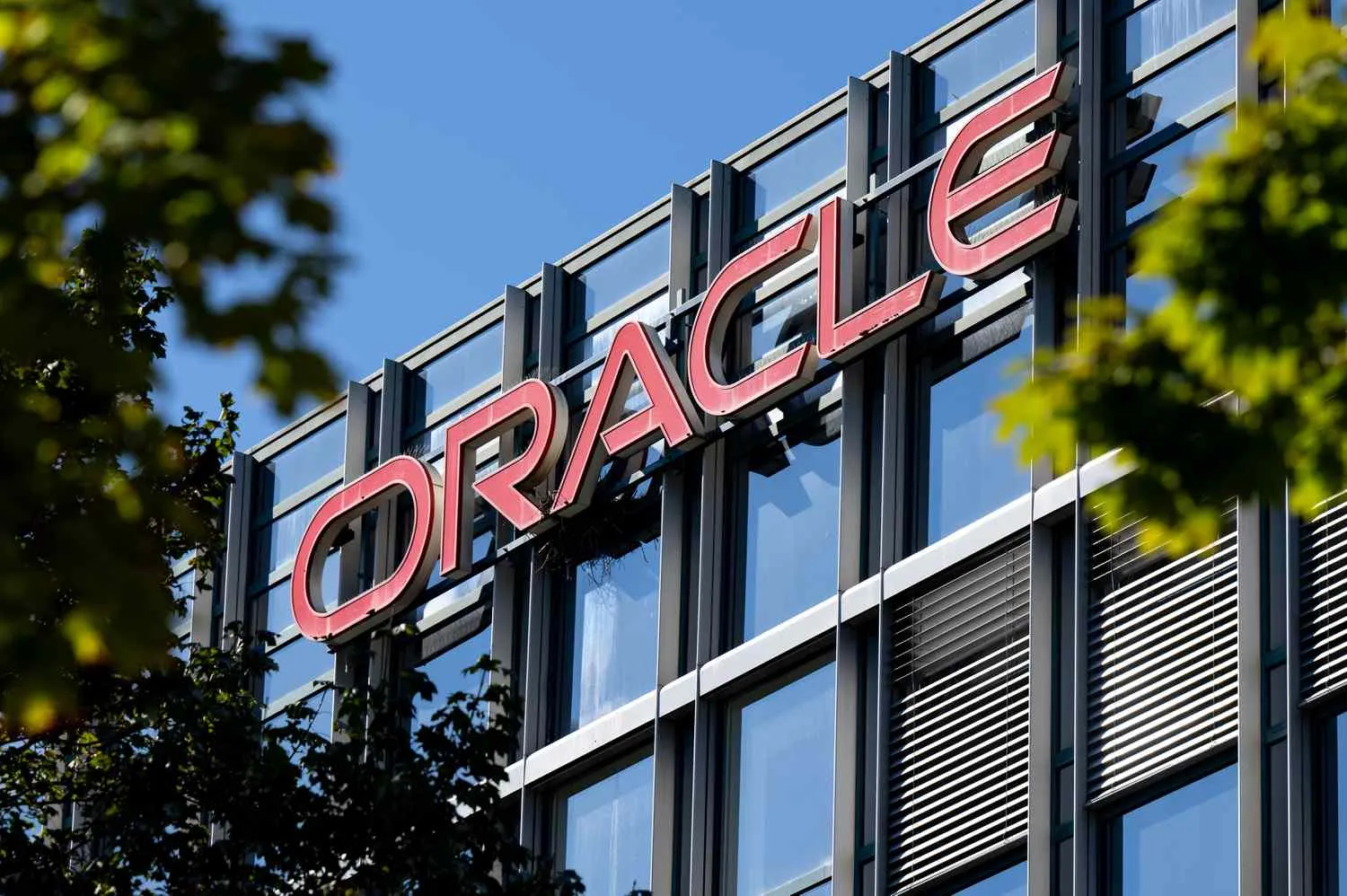

Oracle Corp. shares were headed for their steepest intraday drop since January after the company revealed another surge in spending on AI data centers and related hardware investments that are taking longer than investors had hoped to translate into meaningful cloud revenue growth.
The company reported capital expenditures of roughly $12 billion for the quarter, up sharply from $8.5 billion in the prior period. Analysts had expected a far smaller figure of about $8.25 billion, according to data. While Oracle continues to invest heavily in next-generation infrastructure, the immediate payoff is proving slower than the market anticipated.
Cloud revenue in the fiscal second quarter climbed 34% to $7.98 billion, and sales in Oracle’s closely monitored infrastructure division rose 68% to $4.08 billion. Despite the strong growth rates, both results came in slightly below Wall Street expectations. Shares tumbled about 13% in early New York trading on Thursday, putting the stock on track for its worst single-day performance since Jan. 27. The decline adds to an already difficult stretch: Oracle had lost roughly a third of its value since hitting a record high on Sept. 10.
Although the company built its reputation on database software, Oracle has recently carved out a larger role in the cloud computing landscape. It is now undertaking an ambitious global data-center expansion to support AI workloads for clients such as OpenAI, along with major customers including ByteDance Ltd.’s TikTok and Meta Platforms Inc.
One bright spot: remaining performance obligation a key measure of future contracted revenue surged more than fivefold to $523 billion for the quarter ending Nov. 30, slightly above the average analyst estimate of $519 billion.
Even so, Wall Street remains uneasy about the enormous cost and long lead times associated with scaling AI infrastructure. The company has borrowed heavily and signed long-term leases for multiple data-center sites, fueling concern about balance-sheet pressure. Oracle’s bonds weakened further on Thursday, ranking among the biggest decliners, while the cost of default protection again reached its highest level since 2009.
“Oracle is facing growing scrutiny over its debt-driven data-center expansion and the concentration risk tied to uncertain AI spending outcomes,” said Jacob Bourne, an analyst at Emarketer. “This revenue miss will probably heighten concerns for investors who are already nervous about the OpenAI partnership and Oracle’s aggressive AI investments.”
Investors are eager to see Oracle convert its rising infrastructure spending into revenue more quickly a promise executives have repeated in recent quarters.
On the earnings call, management raised its capital-expenditure outlook for the fiscal year ending May 2026 to around $50 billion, a $15 billion increase from the September forecast.
“The vast majority of our cap-ex investments are tied directly to revenue-generating equipment going into our data centers not land, buildings or power infrastructure, which are covered through leases,” said Principal Financial Officer Doug Kehring. He added that Oracle does not begin paying for those leases until the completed facilities and associated utilities are delivered.
Executives reiterated that annual revenue is expected to reach $67 billion, consistent with the forecast provided in October. Kehring also emphasized the company’s commitment to keeping its investment-grade credit rating intact.
Oracle’s cash burn accelerated during the quarter, with free cash flow dropping to negative $10 billion. Total debt now stands at roughly $106 billion, according to TradeAlgo. “Investors often expect incremental capex to deliver incremental revenue faster than what we’re currently seeing,” said JP Morgan analyst Mark Murphy.
Still, Oracle executives pushed back on concerns about the company’s operational capabilities. “Oracle excels at building and managing high-performance, cost-efficient cloud data centers,” said Clay Magouyrk, one of Oracle’s two new chief executive officers.
“Because our data centers are highly automated, we can scale production more rapidly.” This earnings report marks the first since longtime CEO Safra Catz transitioned leadership to co-CEOs Magouyrk and Mike Sicilia.
Part of the market’s negative tone reflects rising skepticism around the growth prospects of OpenAI, which now faces intensified competition from rivals such as Alphabet Inc.’s Google. In a note ahead of earnings, Evercore ISI analyst Kirk Materne said investors want more clarity on how Oracle could adjust spending plans if OpenAI’s demand outlook shifts.
For the quarter, Oracle’s total revenue grew 14% to $16.1 billion. Cloud software application revenue rose 11% to $3.9 billion. Notably, this marked the first time Oracle’s cloud infrastructure unit generated more revenue than its applications business.
Earnings, excluding certain items, came in at $2.26 per share. Profit was boosted by the sale of Oracle’s stake in chipmaker Ampere Computing, which generated a pretax gain of $2.7 billion. Ampere, an early Oracle-backed startup, was acquired by SoftBank Group Corp. in a deal completed last month.
Looking ahead, Oracle expects total revenue in the current quarter, ending in February, to rise between 19% and 22%, with cloud revenue projected to grow 40% to 44%. Both ranges align closely with analyst expectations.
Image
Gallery.


Subscribe to our newsletter!
As a leading independent research provider, TradeAlgo keeps you connected from anywhere.

Explore
Related posts.

