

Get the Latest Updates!

.svg)

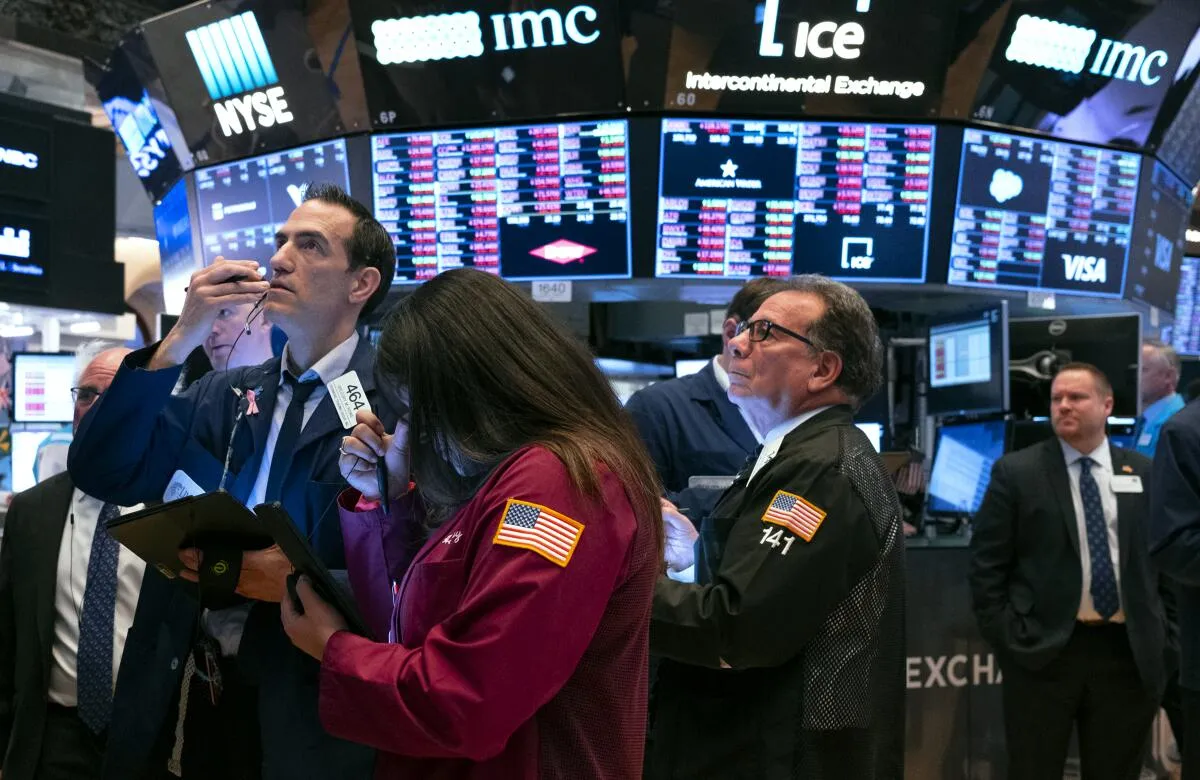

U.S. stocks edged lower on Monday as the Trump administration intensified its criticism of the Federal Reserve, reviving concerns around the so-called “sell America” trade and unsettling investor confidence.
The S&P 500 slipped 0.06% by 9:59 a.m. in New York, retreating from the prior session’s record closing high. The Nasdaq 100 also moved modestly lower, down 0.1%, while market anxiety remained contained, with the Cboe Volatility Index hovering near the 15 level.
Investors remain highly sensitive to any threat to the Fed’s independence, a principle long viewed as essential to the stability of both equity and bond markets. “U.S. equity and fixed-income investors see Federal Reserve independence as absolutely critical,” said Sam Stovall, chief investment strategist at CFRA Research. He noted that markets understand the risks of overstimulating the economy, warning that overly aggressive rate cuts could reignite inflation pressures.
The latest bout of volatility followed comments from Fed Chair Jerome Powell, who revealed that the central bank has received grand jury subpoenas from the Justice Department. The subpoenas relate to Powell’s congressional testimony concerning renovation projects at the Fed’s headquarters. Powell went on to say that the threat of criminal charges is a direct “consequence” of the Fed’s refusal to align monetary policy with President Donald Trump’s preferred interest-rate path.
According to JPMorgan’s trading desk, Trump’s most recent attacks on the Federal Reserve represent a tangible risk for U.S. equities in the near term. Still, strategists say the situation could also create opportunity. Andrew Tyler, head of global market intelligence at JPMorgan, suggested that any easing of the administration’s efforts to undermine Fed independence could spark a short-lived buying opportunity for investors willing to step in during periods of heightened uncertainty.
Market participants say the pushback from investors has been swift. “Markets are rebelling against President Trump’s assault on Chair Powell and the Federal Reserve,” said Derek Holt, head of capital markets economics at Scotiabank.
Holt added that the market reaction may have been somewhat muted overnight due to a national holiday in Japan, which limited activity across Asian markets and reduced the initial global spillover.
Tensions between Trump and the Fed are hardly new. Since returning to the White House for a second term, the president has repeatedly clashed with Powell and other policymakers. Those clashes have included efforts to remove Fed Governor Lisa Cook and persistent demands for sharp interest-rate cuts. Past episodes of political pressure on the central bank have also unsettled markets, reinforcing investor concerns about the erosion of institutional independence.
This time, the fallout has extended beyond stocks. The renewed “sell America” narrative has rippled across asset classes as the administration’s attacks escalated. The U.S. dollar and Treasuries have weakened alongside equities, signaling broader unease about the direction of policy and governance.
“Political pressure on the Fed isn’t just noise it’s a real market risk,” said Mark Malek, chief investment officer at Siebert. He pointed out that bond markets are already flashing warning signs, with rising yields presenting a meaningful headwind for growth-oriented stocks that are more sensitive to higher discount rates.
Elsewhere in markets, precious metals and related mining stocks rallied strongly. Gold and silver both climbed to record levels in a broad-based move tied to fears over potential legal action against the Federal Reserve and the resulting demand for safe-haven assets.
Not all sectors shared in the gains. Shares of major U.S. banks, including JPMorgan Chase & Co. and Capital One Financial Corp., fell after Trump called on credit-card companies to cap interest rates at 10% for a year, raising concerns about potential regulatory pressure on lenders’ profitability.
In the healthcare space, UnitedHealth Group Inc. traded lower following a Wall Street Journal report that a Senate committee investigating the company found it had used “aggressive tactics” to secure diagnoses that boosted payments under its Medicare Advantage plans.
Taken together, Monday’s market moves underscore how quickly political developments can reshape investor sentiment. With tensions between the White House and the Federal Reserve showing little sign of easing, markets may remain vulnerable to further swings as investors weigh policy risk against underlying economic fundamentals.
Image
Gallery.


Subscribe to our newsletter!
As a leading independent research provider, TradeAlgo keeps you connected from anywhere.

Explore
Related posts.

